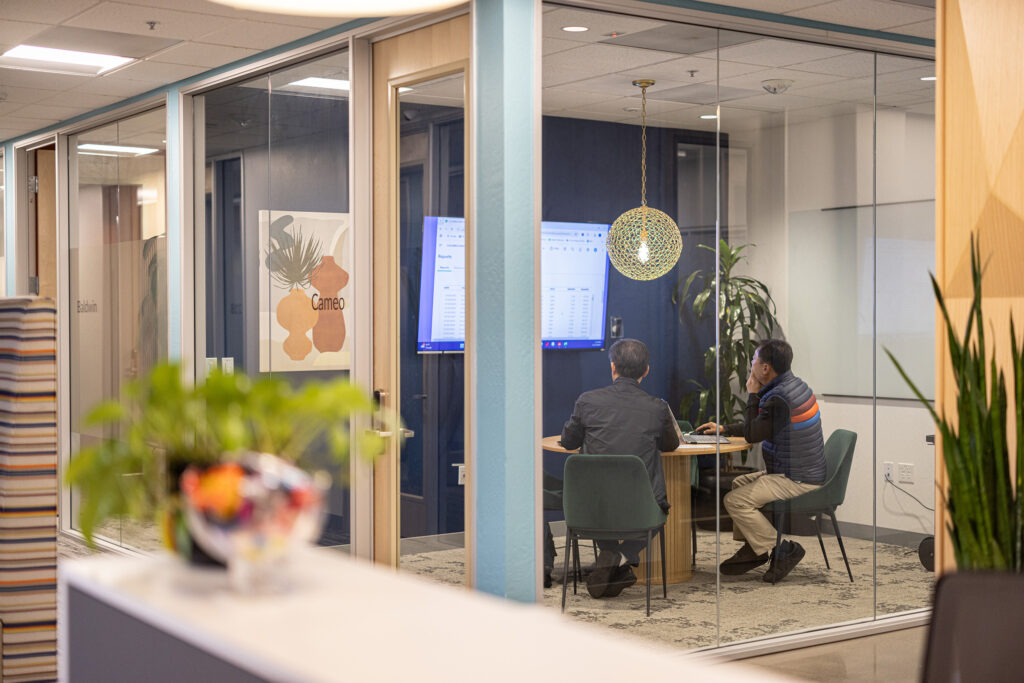
For years, workplace design conversations focused on where people work. Today, the more important question is how people work.
Hybrid schedules have settled into place for many organizations, but work itself continues to evolve. Teams are experimenting with meeting clustering, no-meeting days, focus sprints, asynchronous collaboration, and flexible work rhythms designed to improve productivity and reduce burnout. The challenge is that many offices were never designed to support these behaviors.
When workplace strategies change but the environment stays the same, friction follows. Employees struggle to find focus space, meeting rooms become bottlenecks, and collaboration areas sit empty when they’re not being used for their intended purpose.
The most successful workplaces aren’t designed around trends. They’re designed around the work habits those trends are trying to enable.
Here are several workplace efficiency practices gaining traction and what they mean for workplace design.
Meeting Clustering: When Collaboration Happens in Waves
One of the most common productivity strategies today is meeting clustering, where teams schedule most meetings during a specific part of the day—often mornings—while protecting afternoons for focused work.
The concept is simple. Rather than interrupting employees every hour with meetings scattered throughout the day, organizations create dedicated collaboration windows and dedicated focus windows.
But this raises an interesting design question: What should happen to collaborative spaces once the meetings are over?
Many offices dedicate large amounts of square footage to conference rooms that sit empty for much of the day. A more effective approach is creating spaces that can adapt as work patterns change throughout the day.
Flexible environments may include:
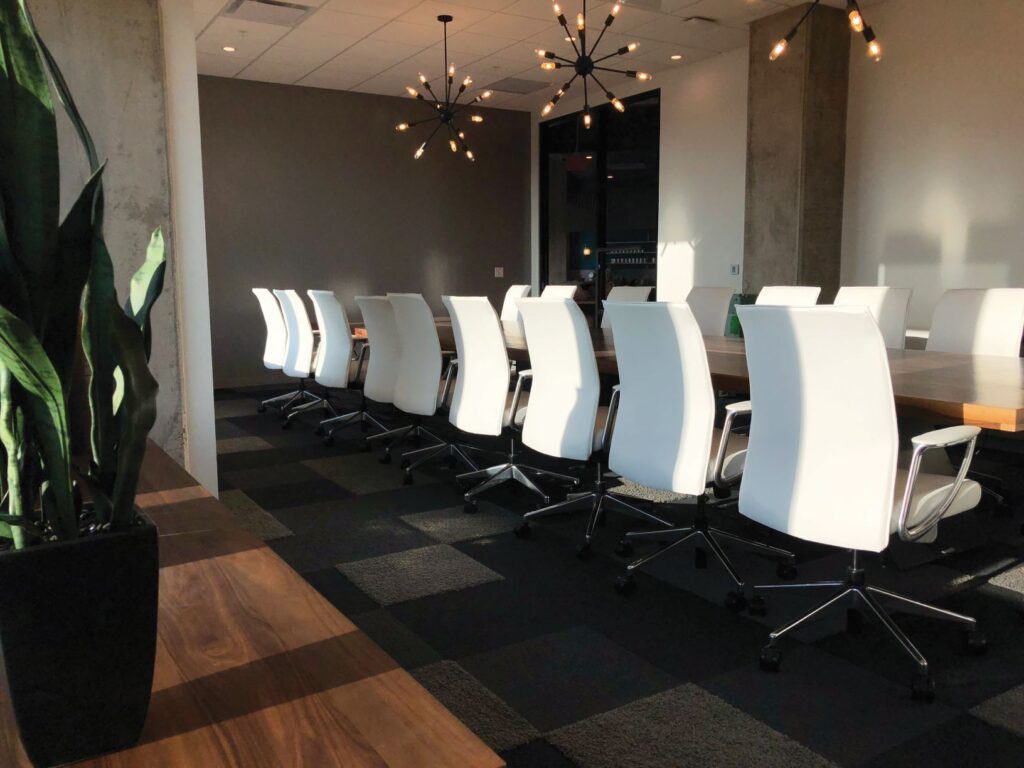
- Large meeting rooms that convert into project spaces
- Team collaboration zones that become quiet work areas in the afternoon
- Furniture that supports both group discussions and individual work
- Technology that allows spaces to transition quickly between uses
The goal isn’t simply providing enough meeting rooms. It’s designing environments that support changing modes of work throughout the day.
No-Meeting Days Require More Than Calendar Policies
Many organizations have introduced no-meeting days to help employees reclaim uninterrupted time for strategic thinking and deep work.
The policy sounds great on paper. However, if employees spend those days working in noisy open environments filled with distractions, the intended benefit quickly disappears.
Deep work requires more than an open calendar. It requires an environment that supports concentration.
When designing for focus-intensive work, organizations should consider:
Acoustic Privacy
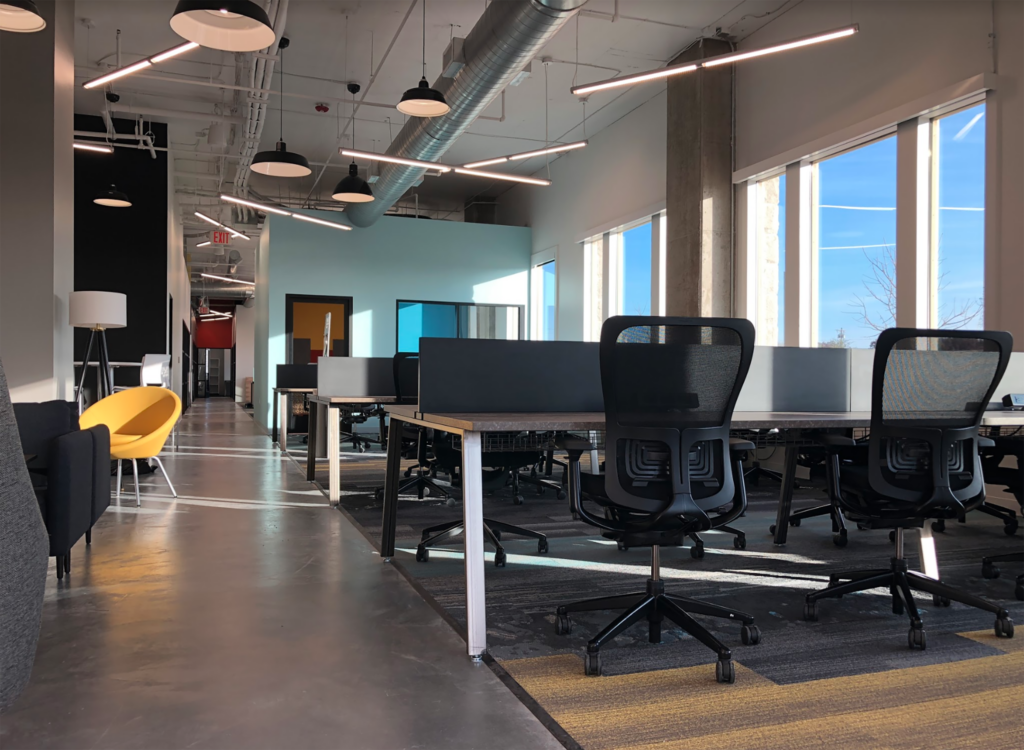
Noise remains one of the most common workplace complaints. Focus areas should be physically separated from social hubs, circulation paths, cafés, and collaboration zones.
Visual Privacy
Even when spaces are relatively quiet, constant movement can be distracting. Strategic furniture placement, partitions, plants, and architectural elements can help reduce visual interruptions.
Choice
Not everyone focuses the same way. Some employees thrive in complete silence, while others prefer moderate background activity. Providing a range of settings allows individuals to choose the environment that best supports their work.
A no-meeting day is only effective if the workplace helps people focus once those meetings are removed.
The Rise of Deep Work and the “Maker Schedule”
Productivity expert Paul Graham popularized the distinction between “maker schedules” and “manager schedules.”
Managers often operate in one-hour increments, moving from meeting to meeting throughout the day. Makers—including designers, writers, developers, analysts, and other creative professionals—often need multiple uninterrupted hours to perform their best work.
Many modern organizations employ both groups simultaneously.
The challenge is that traditional office environments tend to favor manager schedules. Meeting rooms, collaboration zones, and social spaces are often prioritized while focus environments receive less attention.
Designing for both work styles means creating balance:
- Collaboration spaces for team discussions and decision-making
- Quiet focus areas for deep concentration
- Private rooms for heads-down work
- Flexible spaces that support individual and group activities
Rather than forcing everyone into the same environment, effective workplaces acknowledge that different work requires different settings.
The Pomodoro Effect: Supporting Work in Focused Sprints
The Pomodoro Technique has become increasingly popular as employees look for ways to improve concentration and avoid burnout.
The concept involves working in focused intervals, often 25 to 50 minutes, followed by short recovery breaks.
What’s interesting from a workplace design perspective is that this method relies heavily on transitions between focus and recovery.
Employees need spaces to:
- Concentrate without interruption
- Step away briefly to recharge
- Move between different work modes
- Return refreshed for the next work session
This is where workplace variety becomes important.
A well-designed office may include:
- Quiet focus rooms
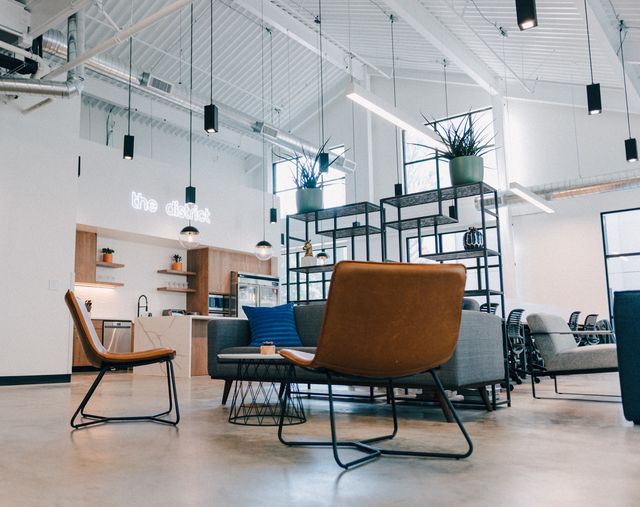
- Casual lounge areas
- Café-style environments
- Walking routes
- Outdoor workspaces
- Informal touchdown spaces
Instead of viewing these areas as amenities, organizations should see them as tools that support productivity and cognitive performance.
Asynchronous Collaboration Is Changing Space Requirements
As organizations become more distributed, many teams are relying less on real-time collaboration and more on asynchronous communication.
Project updates, brainstorming, documentation, and decision-making increasingly happen through digital tools rather than constant meetings.
This shift has implications for workplace design.
Organizations may need fewer traditional conference rooms and more spaces that support:
- Individual work
- Video calls
- Content creation
- Documentation
- Small-group collaboration
The office is becoming less about gathering everyone together all day and more about creating intentional moments of collaboration when they add value.
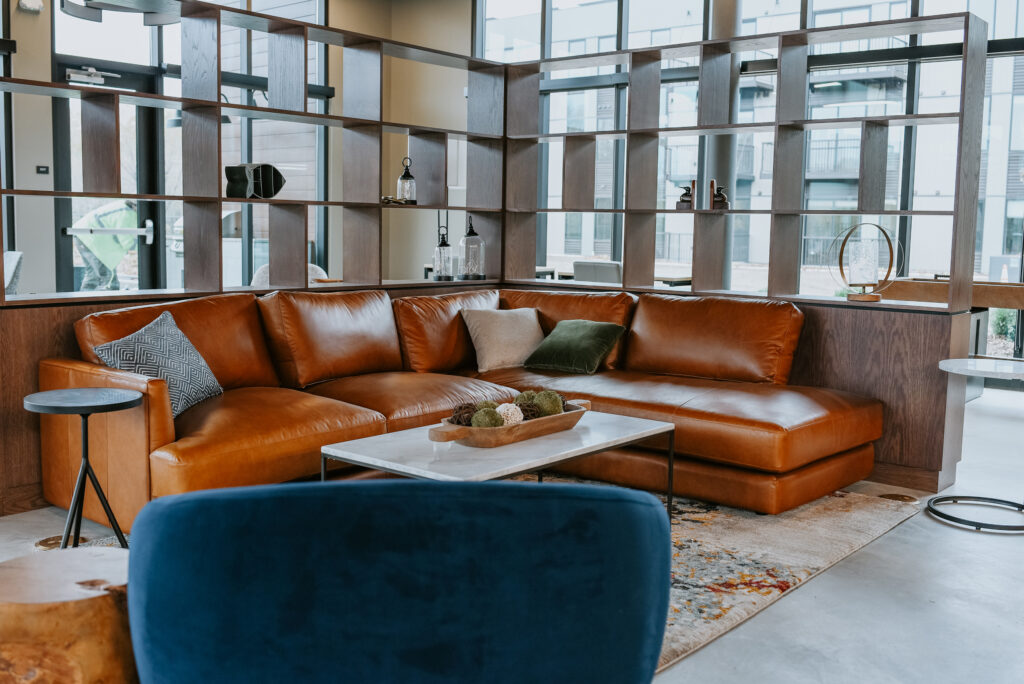
Designing for Energy, Not Just Activity
One of the most overlooked concepts in workplace design is energy management.
Employees don’t work at the same intensity throughout the day. Energy levels naturally fluctuate, and different tasks require different mental states.
Some work demands high concentration. Other tasks benefit from conversation, movement, or social interaction.
The most effective workplaces recognize these shifts and create environments that support them.
Rather than viewing the office as a single workspace, organizations can think of it as a collection of settings that support different energy levels:
- High-energy collaboration zones
- Moderate-energy project spaces
- Low-stimulation focus environments
- Recovery and recharge areas
This approach allows employees to move through the workplace in ways that align with their work rather than forcing all work into the same environment.
The Future Workplace Supports Work, Not Just Presence
Many organizations continue to debate return-to-office policies, attendance expectations, and hybrid schedules.
But the more important conversation may be whether the workplace actually supports the way people work today.
Meeting clustering, no-meeting days, deep work, asynchronous collaboration, and productivity sprints are all attempts to solve the same challenge: helping employees work more effectively.
The workplace should be part of that solution.
The organizations seeing the greatest success aren’t chasing every new workplace trend. They’re paying attention to how work is evolving and designing environments that support those behaviors.
Because at the end of the day, great workplace design isn’t about creating beautiful spaces.
It’s about creating environments that help people do their best work.