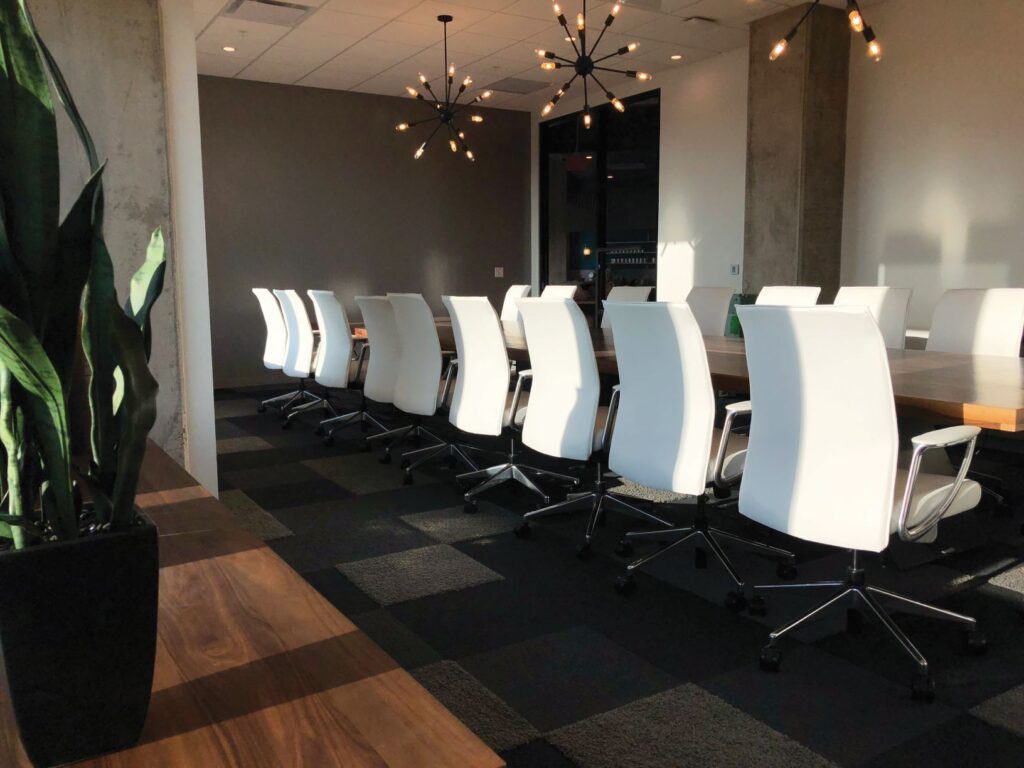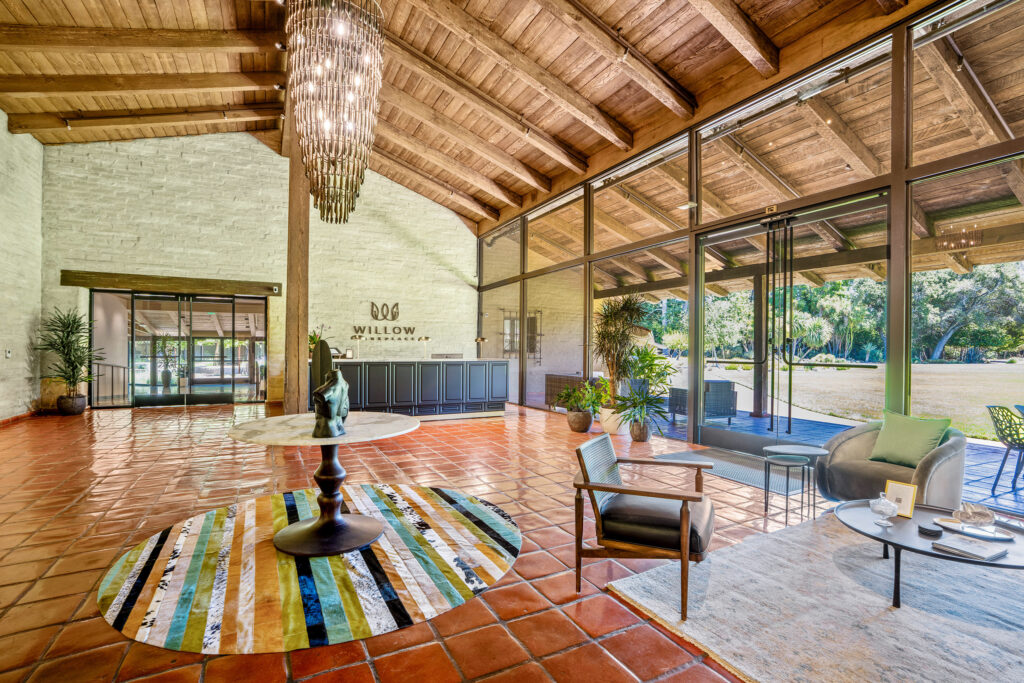
There is a moment when a guest enters a hotel for the first time and decides, often almost instinctively, how they feel about the property.
It happens before check-in. Before they see their room. Sometimes before anyone has even greeted them.
The lobby is already shaping how they feel.
Its scale, lighting, acoustics, materials, furnishings, and even the distance between the entrance and front desk begin shaping expectations for everything that follows. This is what makes hotel lobby design so interesting. Few spaces are asked to communicate so much, so quickly, while simultaneously performing so many different functions.
The most compelling hotel lobby design ideas, therefore, aren’t simply aesthetic decisions. They begin with a larger question: What should a guest understand and feel about this property from the moment they arrive?
The Lobby Is the Beginning of the Guest Experience
For years, hotel lobbies were primarily transitional spaces. Guests entered, checked in, and continued to their rooms.
That definition has expanded considerably.
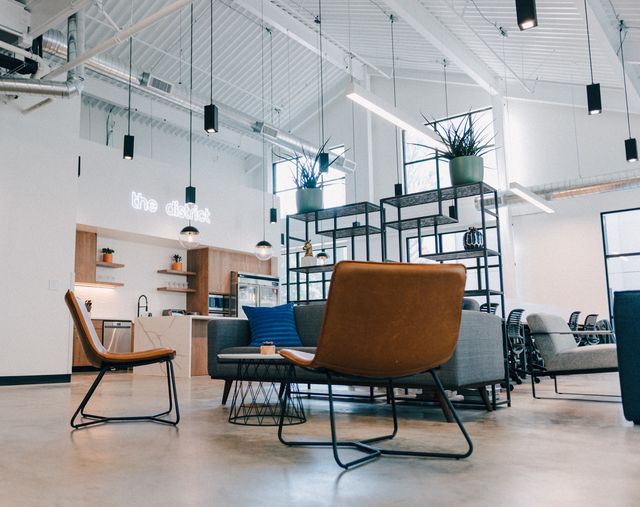
Today’s lobby may function as a living room, meeting place, workspace, waiting area, social hub, or quiet retreat, sometimes all within the same day. Guests don’t simply move through these environments anymore. They inhabit them.
That shift changes the design conversation.
A successful lobby must still make arrival effortless, but it also needs to give people reasons to stay. That doesn’t mean filling every available corner with seating. It means understanding the different experiences that should occur within the space and creating an environment that allows them to coexist naturally.
A guest having a private conversation shouldn’t feel as though they’re sitting in the middle of the check-in queue. Someone working for an hour shouldn’t occupy the same type of setting as a group gathering before dinner. And a guest entering the hotel for the first time should never have to search for where to go.
These distinctions may feel subtle, but they are often what separate an attractive lobby from an exceptionally well-designed one.
Luxury Is Increasingly About Restraint
There was a time when luxury hotel lobby design was largely communicated through grandeur: expansive volumes, polished stone, elaborate fixtures, and materials that immediately announced their value.
Those elements still have their place. But contemporary luxury has become more nuanced.
Increasingly, luxury is communicated through how carefully a space has been considered.
It might be the way millwork meets a stone surface. The weight and texture of a fabric. The scale of a custom fixture relative to the room. The comfort of a chair that happens to be beautiful. Or the way lighting reveals the texture of a wall without calling attention to the source of the light itself.
In this sense, restraint can be more powerful than excess.
A modern luxury hotel lobby design doesn’t necessarily need more. It needs the right things, selected and composed with enough intention that nothing feels arbitrary.
This is particularly true in hospitality because guests experience interiors differently than they experience photographs of them. A dramatic lobby may make an extraordinary first impression online, but the physical experience has to sustain that promise.
Luxury needs to be felt as well as seen.
A Five-Star Lobby Isn’t Defined by a Material Palette
It would be easy to describe 5 star hotel lobby interior design in terms of stone, custom millwork, designer furniture, statement lighting, and premium finishes.
But those are ingredients, not the experience itself.
A five-star environment is ultimately defined by the degree of thought behind it.
Does arrival feel intuitive? Are guests immediately oriented without relying on excessive signage? Does the scale of the space feel impressive without becoming impersonal? Are there places where someone naturally wants to sit? Does the environment transition gracefully from daytime arrivals to evening activity?
Even operational elements contribute to that perception.
The front desk, for example, isn’t simply a piece of millwork. Its location determines how guests move into the lobby. Its height and scale influence how interactions with staff feel. Its visibility can either reassure an arriving guest or create confusion.
Exceptional hospitality design considers these moments collectively.
The goal isn’t for guests to notice every design decision. In many cases, the most successful decisions are the ones they never consciously recognize.
They simply experience a hotel that feels effortless.
Lighting Changes More Than What Guests See
Few design elements have as much influence over the emotional character of a hotel lobby as lighting.
Effective hotel lobby lighting design isn’t about choosing a dramatic decorative fixture and then determining how to illuminate everything around it. It begins with understanding how the space should feel at different moments.
A lobby at 9 a.m. and the same lobby at 9 p.m. shouldn’t necessarily feel identical.
During the day, natural light may establish much of the atmosphere. As evening approaches, the visual hierarchy can shift. Seating areas become warmer and more intimate. Architectural surfaces gain depth. Artwork becomes more prominent. Circulation remains clearly illuminated without making the entire lobby uniformly bright.
Layering is what makes this possible.
Ambient, accent, decorative, and task lighting each have a role, but their value comes from how they work together.
In sophisticated hospitality environments, some of the most effective lighting is almost invisible. Guests notice the beautifully textured wall rather than the fixture illuminating it. They gravitate toward a seating area because it feels comfortable without necessarily understanding why.
Lighting becomes part of the architecture rather than something applied to it.
Great Hospitality Design Engages More Than the Eye
A hotel lobby is often judged first by what we see, but our experience of a space is shaped by much more than its visual design. The most considered hospitality environments engage all five senses, often in ways guests may not consciously recognize.
Lighting and materials establish visual character, while acoustics influence whether a lobby feels energetic, intimate, or calm. The texture of upholstery, furniture, and finishes shapes the tactile experience. Even taste can become part of the arrival, whether through a welcome beverage, coffee service, or another hospitality touchpoint.
Then there is scent. Many hotels use a carefully considered fragrance to create an emotional connection to the space and reinforce the property’s identity. Because scent is closely associated with memory, a distinctive aroma can become part of how guests remember a hotel long after their stay.
The opportunity isn’t to stimulate every sense at once. It’s to consider how they work together. A serene lobby might pair warm lighting with soft acoustics, tactile natural materials, and a subtle fragrance. A more energetic property might make very different choices.
When those sensory details reinforce the same idea, the lobby becomes more than a beautiful interior. It creates an atmosphere guests can feel.
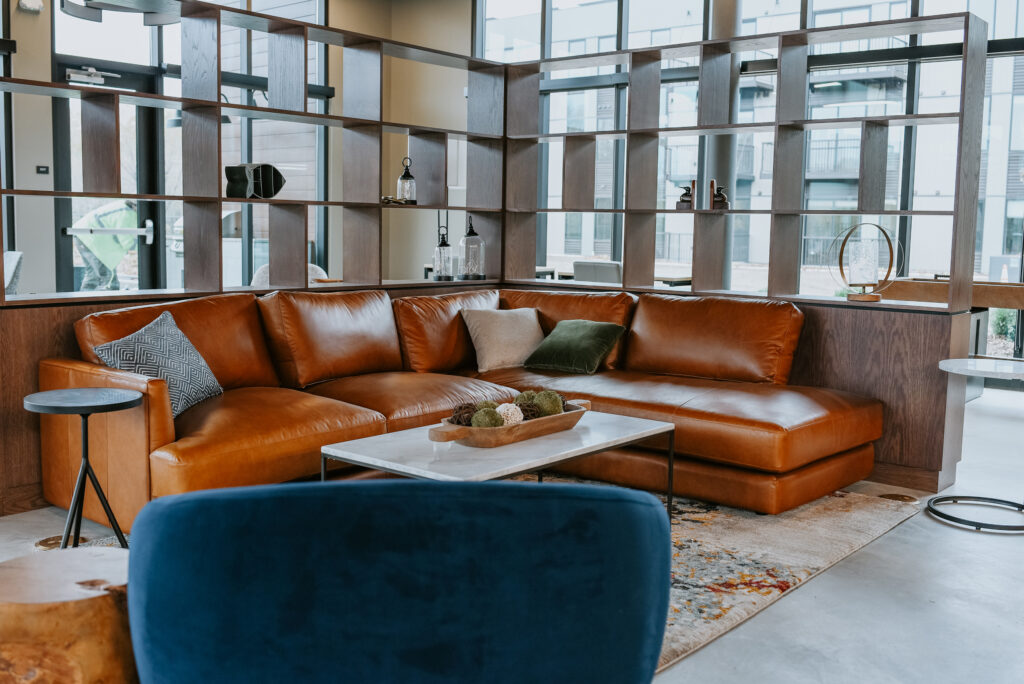
The Best Lobbies Give People Permission to Use Them Differently
Watch people in a successful hotel lobby and you’ll rarely see everyone doing the same thing.
Someone is checking in. Someone else is waiting for a car. Two people are meeting over coffee. A traveler is answering emails between appointments. Another guest has found a chair away from the activity and is reading.
The challenge for designers is accommodating those behaviors without turning the lobby into a collection of unrelated zones.
Furniture placement can create subtle boundaries. Changes in lighting can establish intimacy. Rugs, ceiling treatments, planting, millwork, and architectural elements can define areas without walls.
The objective is not necessarily flexibility in the traditional sense. It’s a choice.
People intuitively seek environments appropriate to what they’re doing. Good design makes those choices apparent without needing to explain them.
A Sense of Place Can’t Be Manufactured
Hospitality design has also moved away from environments that could exist almost anywhere.
Guests increasingly value a sense of place, but creating one requires more than adding locally inspired artwork to the walls.
The most compelling hotel interiors interpret their surroundings rather than imitate them.
That might mean drawing from regional materials, craftsmanship, landscape, architectural history, or cultural references. The influence may be obvious, or it may be expressed through something as subtle as a color palette or material selection.
What matters is authenticity.
The lobby should belong to both the hotel and its location.
This is particularly valuable for luxury and boutique properties, where differentiation is an important part of the guest experience. If the same lobby could be transported unchanged to another city, something about the opportunity has probably been missed.
Brand Should Be Experienced, Not Applied
The same principle applies to the hotel’s brand.
A brand isn’t fully expressed by incorporating its colors into upholstery or placing a logo behind reception.
The more interesting question is: What does this brand feel like as a physical environment?
If the property is sophisticated but approachable, how does that influence material selections? If it’s energetic and social, what does that mean for furniture arrangements and lighting? If privacy and personalized service define the guest experience, how should that influence arrival?
These questions create a much richer design vocabulary than simply translating graphic brand standards into an interior.
When the relationship between brand and environment is successful, guests don’t necessarily need to identify it consciously.
The space simply feels like it belongs.
Designing the Moment Before Everything Else
Ultimately, great hotel lobby design isn’t about assembling the right collection of finishes, furnishings, and fixtures.
It’s about orchestrating an experience.
Arrival. Orientation. Interaction. Pause. Movement. Connection.
Every one of those moments presents an opportunity to reinforce what makes a property distinctive.
At Workplace Studio, we approach hotel lobby interior design by first understanding the experience a property wants to create and then considering how architecture, materials, lighting, furnishings, and details can bring that experience to life.
Because the lobby isn’t simply another room within a hotel.
It’s the moment the hotel begins.